
Product Description
Machine, is a physical system using power to apply forces and control movement to perform an action.
Machine part, is the heart of every machine. In here, you can find whatever part that you need.
Applicable loader models are as follows
CLG816/CLG816G/CLG816C/CLG820/CLG820C/CLG835/CLG835H/CLG836/ZL30E/ZL40B/CLG842/CLG842H/ZL50C/ZL50CN/CLG855/CLG855N/CLG856/CLG856H/ CLG862/CLG862H /CLG870H/CLG886H/CLG890H/CLG8128H/CLG888/CLG877
The main selling machinery parts of CHINAMFG are LIUGONG, SD-LG, , XGMA, SHXIHU (WEST LAKE) DIS.I, SEM, Ko-matsu, CAT, Doosan, and so on. CHINAMFG has more than 2,000,000 machinery parts. A powerful database system provides strong data support even by just giving the part number. No matter original or OEM, you can get whatever you want.
More parts haven’t been shown in here, please feel free to contact us.
LGMC (ZheJiang CHINAMFG Machinery Co., Ltd), a company that specialized in not only construction machinery, but also more than 2,000,000 machinery parts (included LIUGONG, S-D-L-G, XGMA, SHXIHU (WEST LAKE) DIS.I, SEM, Ko-matsu, CAT, Doosan, and so on), having all the engineering that can be used in the manufacturing industry, construction industry, general industry, and even agriculture. Those machines have been widely used everywhere with multiple functions. CHINAMFG focuses on heavy machinery investment in research and development of small machinery, winning great popularity in aboard markets. In here you can find everything no matter what you want.
Having a great advantage of location, CHINAMFG located in HangZhou, a city that has extensive rail connections with the rest of China, is the home of LiuGong Company, the biggest industrial base of ZheJiang Province. In line with the principle of “Honesty, High quality, Reliability, and Efficiency”, CHINAMFG has won great recognition in the market in just a few years, has gained support from major domestic manufacturers and trade organizations as well. CHINAMFG occupied the market relies on the good product quality, good after-sales service and exported to South Asia, Southeast Asia, Africa, South America, Mid East, Eastern Europe, and other regions. 24 hours 7 days stand by with a professional selling team, solves all kinds of problems on time, and provides specialized commentary of your questions. Always ready to welcome you and help to have a great cooperation experience.
| After-sales Service: | 3 Months |
|---|---|
| Warranty: | 3 Months |
| Application: | Hoisting Machinery |
| Certification: | CE, ISO9001: 2000 |
| Condition: | New |
| Installation Position: | Loader |
| Customization: |
Available
| Customized Request |
|---|
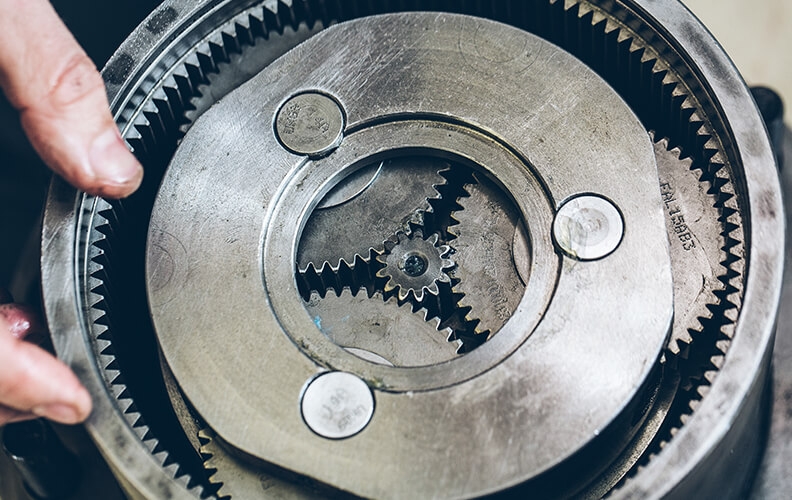
Can you describe the interaction between sun gears and planet gears?
The interaction between sun gears and planet gears is a fundamental aspect of gear systems. Let’s delve into the details of this interaction:
- Planetary Gear Systems:
The interaction between sun gears and planet gears primarily occurs in planetary gear systems. These systems consist of multiple planet gears that rotate around a central sun gear while meshing with an outer ring gear. This arrangement allows for various mechanical advantages and functionalities.
- Power Transmission:
The sun gear serves as the primary driver in a planetary gear system. When power is applied to the sun gear, it transmits rotational force to the planet gears. The planet gears, due to their meshing with both the sun gear and the ring gear, distribute the transmitted power evenly across all the gears.
As the sun gear rotates, the planet gears rotate in the opposite direction around the sun gear while also rotating around their own axes. This rotational movement of the planet gears, driven by the sun gear, plays a crucial role in power transmission within the gear system.
- Speed and Torque Ratios:
The interaction between the sun gear and planet gears affects the speed and torque ratios in a gear system. By choosing different sizes for the sun gear and planet gears, engineers can manipulate the gear ratios to achieve specific outcomes.
When the sun gear is larger than the planet gears, it results in a higher speed ratio. In this case, the sun gear rotates faster than the planet gears, leading to an output shaft or ring gear with increased rotational speed relative to the input shaft or sun gear.
Conversely, when the sun gear is smaller than the planet gears, it leads to a lower speed ratio. In this scenario, the sun gear rotates slower than the planet gears, resulting in an output shaft or ring gear with reduced rotational speed compared to the input shaft or sun gear.
Similarly, the interaction between the sun gear and planet gears affects the torque ratio. When the sun gear is larger than the planet gears, it amplifies the torque, resulting in higher output torque relative to the input torque. Conversely, when the sun gear is smaller, it reduces the torque, resulting in lower output torque compared to the input torque.
- Direction Reversal:
The interaction between the sun gear and planet gears also enables torque direction reversal in planetary gear systems. When the sun gear rotates in a specific direction, it imparts torque to the planet gears, causing them to rotate in the opposite direction around the sun gear.
This counterclockwise rotation of the planet gears, as driven by the sun gear, leads to the ring gear rotating in the opposite direction. By reversing the direction of the sun gear’s rotation, the torque direction can be reversed once again. This ability to change torque direction makes planetary gear systems versatile and applicable in various mechanical and automotive applications.
- Mechanical Advantages:
The interaction between sun gears and planet gears offers several mechanical advantages. The distribution of torque across multiple planet gears allows for increased load-bearing capacity and improved system reliability. As each planet gear shares the load, the overall stress on individual gears is reduced, enhancing the system’s durability.
Moreover, the arrangement of sun gears and planet gears in a planetary gear system results in compact designs and high power density. The distributed power transmission and torque-sharing characteristics enable the system to handle higher loads while occupying minimal space.
In summary, the interaction between sun gears and planet gears in planetary gear systems is crucial for power transmission, achieving speed and torque ratios, enabling torque direction reversal, and providing mechanical advantages such as load distribution and compact designs. Understanding this interaction is essential for designing and optimizing gear systems in various applications.
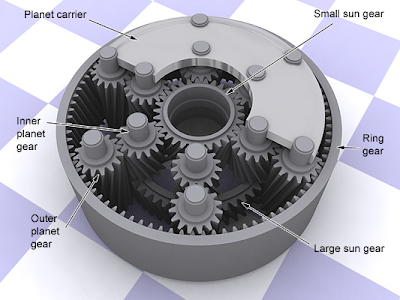
What are the considerations for lubrication and maintenance of sun gears?
Proper lubrication and maintenance of sun gears are crucial for ensuring their optimal performance, longevity, and reliability. Sun gears, like other mechanical components, require appropriate lubrication to minimize friction, reduce wear, and prevent damage. Here are some considerations for lubrication and maintenance of sun gears:
- Lubrication:
Effective lubrication is essential for sun gears to operate smoothly and efficiently. Consider the following aspects:
- Lubricant Selection: Choose a lubricant that is specifically designed for gear applications. The lubricant should have the necessary viscosity, additives, and thermal stability to provide adequate lubrication and protection to the sun gears under the operating conditions.
- Proper Lubricant Application: Ensure that the lubricant is applied correctly to the sun gears. This can involve methods such as oil baths, oil mist systems, or grease application, depending on the specific gear system and its requirements. Follow the manufacturer’s guidelines or consult with lubrication experts for the appropriate lubrication technique.
- Regular Lubricant Inspection: Monitor the lubricant condition regularly to ensure its effectiveness and to detect any signs of contamination, degradation, or insufficient lubrication. Perform oil analysis or visual inspections as recommended by lubrication experts or equipment manufacturers.
- Maintenance:
Proper maintenance practices help keep sun gears in optimal working condition and extend their service life. Consider the following maintenance considerations:
- Regular Inspections: Conduct routine inspections of the sun gears to check for any signs of wear, damage, misalignment, or abnormal operating conditions. Inspections can help identify potential issues early, allowing for timely maintenance or repairs.
- Torque and Load Monitoring: Keep track of the torque and load applied to the sun gears. Ensure that the gear system is not subjected to excessive loads or overloading, as this can lead to premature wear and failure. Use appropriate monitoring techniques, such as load sensors or torque meters, to ensure the gear system operates within its designed limits.
- Alignment and Gear Meshing: Ensure proper alignment and gear meshing between the sun gear, planet gears, and ring gear. Misalignment or improper gear engagement can cause excessive wear and damage to the gear system. Regularly check and adjust the gear alignment as needed.
- Proactive Repairs and Replacements: If any issues, such as worn teeth, damaged gear components, or abnormal vibrations, are detected during inspections or monitoring, take proactive measures to repair or replace the affected parts. Timely repairs can prevent further damage and improve the overall performance and reliability of the sun gears.
- Operating Conditions: Consider the operating conditions of the gear system, such as temperature, humidity, and environmental factors. Ensure that the sun gears are protected from excessive heat, moisture, contaminants, and corrosive substances that can adversely affect their performance and durability.
In summary, proper lubrication and maintenance of sun gears are critical for their optimal performance and longevity. Considerations include selecting the right lubricant, applying it correctly, inspecting the lubricant regularly, conducting routine inspections, monitoring torque and load, ensuring proper alignment and gear meshing, performing proactive repairs and replacements, and considering the operating conditions. Adhering to these considerations helps ensure reliable and efficient operation of sun gears in various mechanical systems.
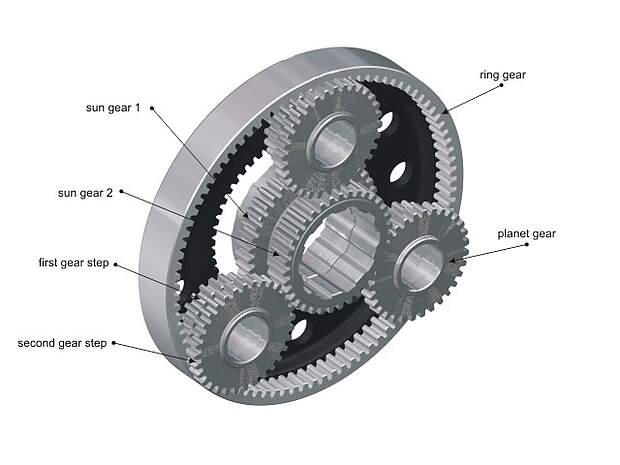
What is a sun gear and how does it function in gear systems?
A sun gear is a fundamental component in gear systems, particularly in planetary gear arrangements. It plays a crucial role in determining the overall gear ratio and power distribution within the system. Here’s an explanation of what a sun gear is and how it functions:
A sun gear is a central gear in a planetary gear set. It is typically located at the center of the gear arrangement and is surrounded by other gears, known as planet gears, as well as an outer ring gear, also called a ring gear or annulus.
The primary function of the sun gear is to transfer torque and provide the driving force in a planetary gear system. Here’s how it functions:
- Power Input: The sun gear receives power input from an external source, such as an engine or motor. It is directly connected to the input shaft and receives rotational motion and torque.
- Planet Gear Engagement: The sun gear engages with multiple planet gears, which are smaller gears that surround the sun gear and mesh with both the sun gear and the ring gear. The planet gears rotate around their own axes while also revolving around the sun gear.
- Power Distribution: As the sun gear rotates, it transmits torque to the planet gears through their meshing teeth. The planet gears, in turn, transfer the torque to the ring gear. The relative sizes of the sun gear, planet gears, and ring gear determine the gear ratio and the distribution of power within the system.
- Gear Ratio Variation: By changing the arrangement and sizes of the sun gear, planet gears, and ring gear, gear systems can achieve different gear ratios. The number of teeth on the sun gear, planet gears, and ring gear, as well as their relative sizes, determine the gear ratio. This allows gear systems to provide various output speeds and torque levels, catering to different operational requirements.
- Directional Control: In some gear systems, the sun gear can also serve as a means of controlling the direction of power transmission. By fixing or holding the sun gear while the ring gear or planet carrier is driven, the gear system can achieve different output directions, such as forward or reverse rotation.
In summary, the sun gear is a central gear in planetary gear systems, responsible for receiving power input, engaging with planet gears, distributing torque to the ring gear, and determining the overall gear ratio. Its function is crucial in achieving different speed and torque combinations, as well as controlling the direction of power transmission within gear systems.


editor by CX 2023-11-20