
Product Description
Machine, is a physical system using power to apply forces and control movement to perform an action.
Machine part, is the heart of every machine. In here, you can find whatever part that you need.
Applicable loader models are as follows
CLG816/CLG816G/CLG816C/CLG820/CLG820C/CLG835/CLG835H/CLG836/ZL30E/ZL40B/CLG842/CLG842H/ZL50C/ZL50CN/CLG855/CLG855N/CLG856/CLG856H/ CLG862/CLG862H /CLG870H/CLG886H/CLG890H/CLG8128H/CLG888/CLG877
The main selling machinery parts of CHINAMFG are LIUGONG, SD-LG, , XGMA, SHXIHU (WEST LAKE) DIS.I, SEM, Ko-matsu, CAT, Doosan, and so on. CHINAMFG has more than 2,000,000 machinery parts. A powerful database system provides strong data support even by just giving the part number. No matter original or OEM, you can get whatever you want.
More parts haven’t been shown in here, please feel free to contact us.
LGMC (ZheJiang CHINAMFG Machinery Co., Ltd), a company that specialized in not only construction machinery, but also more than 2,000,000 machinery parts (included LIUGONG, S-D-L-G, XGMA, SHXIHU (WEST LAKE) DIS.I, SEM, Ko-matsu, CAT, Doosan, and so on), having all the engineering that can be used in the manufacturing industry, construction industry, general industry, and even agriculture. Those machines have been widely used everywhere with multiple functions. CHINAMFG focuses on heavy machinery investment in research and development of small machinery, winning great popularity in aboard markets. In here you can find everything no matter what you want.
Having a great advantage of location, CHINAMFG located in HangZhou, a city that has extensive rail connections with the rest of China, is the home of LiuGong Company, the biggest industrial base of ZheJiang Province. In line with the principle of “Honesty, High quality, Reliability, and Efficiency”, CHINAMFG has won great recognition in the market in just a few years, has gained support from major domestic manufacturers and trade organizations as well. CHINAMFG occupied the market relies on the good product quality, good after-sales service and exported to South Asia, Southeast Asia, Africa, South America, Mid East, Eastern Europe, and other regions. 24 hours 7 days stand by with a professional selling team, solves all kinds of problems on time, and provides specialized commentary of your questions. Always ready to welcome you and help to have a great cooperation experience.
| After-sales Service: | 3 Months |
|---|---|
| Warranty: | 3 Months |
| Application: | Hoisting Machinery |
| Certification: | CE, ISO9001: 2000 |
| Condition: | New |
| Installation Position: | Loader |
| Customization: |
Available
| Customized Request |
|---|
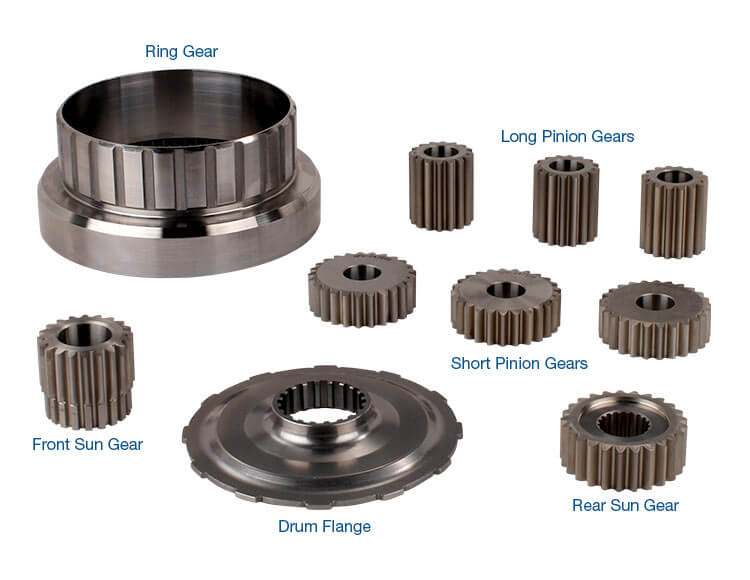
Can sun gears be used in renewable energy systems?
Sun gears can indeed be used in renewable energy systems, particularly in applications that involve the conversion and transmission of mechanical power. Let’s explore how sun gears can be utilized in different types of renewable energy systems:
- Wind Turbines:
In wind turbines, sun gears can be employed as part of the gearbox mechanism. The gearbox is responsible for increasing the rotational speed of the wind turbine’s rotor to generate electricity efficiently. Sun gears, along with other gears such as planet gears and ring gears, can be used to achieve the desired gear ratios and torque amplification. By leveraging sun gears, wind turbines can convert the relatively low rotational speed of the rotor into the higher rotational speed required by the generator, which produces electricity.
- Solar Tracking Systems:
Sun gears can also play a role in solar tracking systems, which are used to maximize the energy generation of solar panels by orienting them towards the sun throughout the day. These systems often utilize gears to control the movement of the solar panels. Sun gears can be incorporated into the gear mechanism to enable precise tracking and adjustment of the solar panels’ position, ensuring optimal sunlight exposure and energy capture.
- Hydroelectric Power Plants:
In hydroelectric power plants, sun gears can be employed in the turbine and generator systems. These systems use the force of flowing or falling water to drive turbines, which, in turn, generate electricity. Sun gears can be part of the turbine’s gearbox, enabling the efficient conversion of the low-speed rotation of the turbine into the high-speed rotation required by the generator. By utilizing sun gears, hydroelectric power plants can enhance the power generation capabilities of the turbines.
- Wave and Tidal Energy Converters:
Wave and tidal energy converters harness the power of ocean waves and tides to generate electricity. Sun gears can be utilized in the transmission systems of these converters. They can help convert the slow, oscillating motion of the waves or tides into a higher rotational speed suitable for driving generators. By incorporating sun gears, these converters can optimize the energy extraction process and improve the efficiency of power generation.
- Geothermal Power Plants:
In geothermal power plants, sun gears can be used in various components of the energy conversion process. Geothermal power plants extract heat from the Earth’s interior to generate electricity. Sun gears can be employed in systems such as turbines and generators, where they facilitate the conversion of thermal energy into mechanical and electrical energy. By utilizing sun gears, geothermal power plants can enhance the efficiency and performance of the energy conversion systems.
In summary, sun gears can find applications in renewable energy systems such as wind turbines, solar tracking systems, hydroelectric power plants, wave and tidal energy converters, and geothermal power plants. By leveraging the functionality of sun gears, these systems can optimize power generation, increase efficiency, and contribute to the sustainable utilization of renewable energy sources.
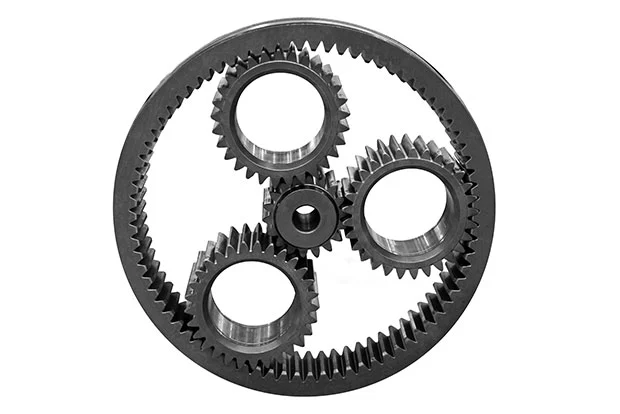
How do you calculate gear ratios involving a sun gear in planetary systems?
Calculating gear ratios in planetary systems involving a sun gear requires considering the number of teeth on the gears and their arrangement. Understanding the calculation process helps in determining the gear ratio and predicting the rotational relationship between the input and output gears. Here’s an explanation of how to calculate gear ratios involving a sun gear in planetary systems:
- Step 1: Identify the Gears: In a planetary system, identify the gears involved, namely the sun gear, planet gears, and ring gear. The sun gear is the gear at the center, surrounded by the planet gears, which in turn engage with the outer ring gear.
- Step 2: Count the Teeth: Count the number of teeth on each gear. The sun gear, planet gears, and ring gear all have a specific number of teeth. Let’s denote these as Ts (sun gear teeth), Tp (planet gear teeth), and Tr (ring gear teeth).
- Step 3: Determine the Gear Ratio: The gear ratio in a planetary system involving a sun gear is calculated using the following formula:
Gear Ratio = (Tp + Tr) / Ts
- Step 4: Interpret the Gear Ratio: The calculated gear ratio represents the rotational relationship between the input (sun gear) and output (ring gear) gears. For example, if the gear ratio is 2:1, it means that for every two revolutions of the sun gear, the ring gear completes one revolution in the opposite direction.
- Step 5: Adjust for Multiple Planet Gears or Fixed Components: In some cases, planetary systems may involve multiple planet gears or fixed components. The presence of multiple planet gears affects the gear ratio, and the inclusion of fixed components alters the gear engagement and behavior. These factors may require additional calculations or adjustments to accurately determine the gear ratio.
In summary, calculating gear ratios involving a sun gear in planetary systems necessitates identifying the gears, counting the teeth on each gear, and applying the appropriate formula. The resulting gear ratio provides insights into the rotational relationship between the sun gear and the ring gear. It’s important to consider any additional elements, such as multiple planet gears or fixed components, that may influence the gear ratio calculation.
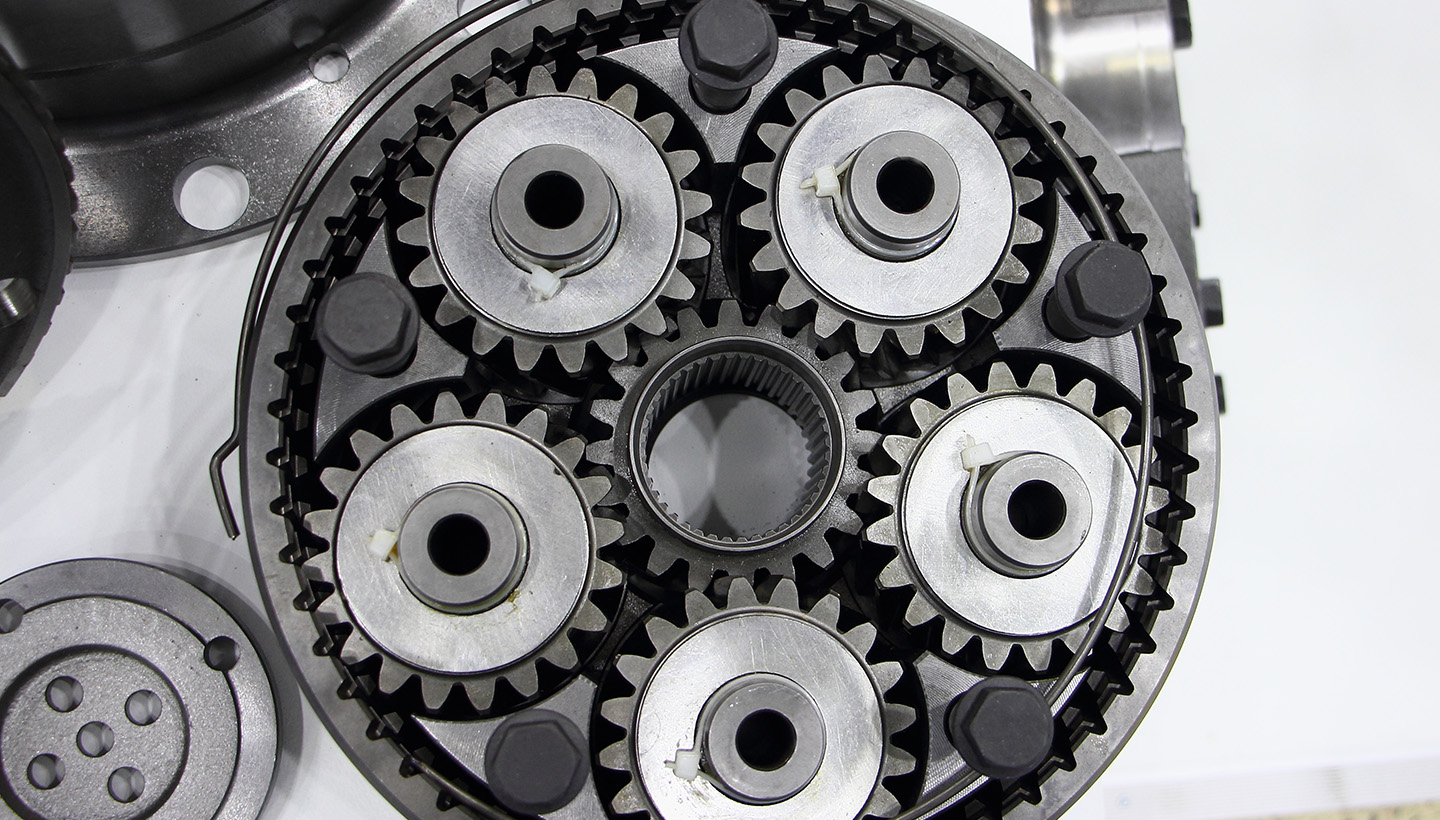
What is the significance of the positioning of the sun gear in planetary gear arrangements?
The positioning of the sun gear in planetary gear arrangements holds significant importance and directly impacts the functionality and performance of the gear system. Understanding the significance of sun gear positioning helps in comprehending how different configurations can be utilized to achieve specific objectives. Here’s an explanation of the significance of the positioning of the sun gear in planetary gear arrangements:
- Power Input: The sun gear serves as the primary power input element in a planetary gear arrangement. Its central position allows it to receive rotational motion and torque from an external source, such as an engine or motor. Being the input gear, the sun gear plays a crucial role in transmitting power to other gears within the system.
- Interaction with Planet Gears: The positioning of the sun gear at the center of a planetary gear arrangement enables its engagement with multiple planet gears. The planet gears, which are smaller gears surrounding the sun gear, mesh with both the sun gear and an outer ring gear. This interaction between the sun gear and planet gears facilitates the transfer of torque and motion between the gears.
- Torque Distribution: As the sun gear rotates, it transmits torque to the planet gears through their meshing teeth. The planet gears, in turn, transfer the torque to the outer ring gear. The positioning of the sun gear, along with the arrangement of the planet gears and ring gear, allows for torque distribution among the gears. This torque distribution mechanism enables efficient load sharing and prevents excessive stress on any single gear, enhancing the overall durability and performance of the gear system.
- Gear Ratio Control: The positioning of the sun gear in relation to the planet gears and the ring gear determines the gear ratio of the planetary gear arrangement. By changing the arrangement and sizes of these gears, different gear ratios can be achieved. The number of teeth on the sun gear, planet gears, and ring gear, as well as their relative sizes, play a crucial role in determining the gear ratio. This flexibility in gear ratio control allows for the customization of output speeds and torque levels to suit specific application requirements.
- Torque Amplification: The positioning of the sun gear in a planetary gear arrangement enables torque amplification. By utilizing the interaction between the sun gear, planet gears, and ring gear, the gear system can multiply or reduce torque based on the gear ratio configuration. This torque amplification feature is particularly advantageous in applications where high torque output is needed, such as automotive transmissions and heavy machinery.
- Directional Control: The positioning of the sun gear also contributes to the directional control capability of a planetary gear arrangement. By fixing or holding the sun gear while the ring gear or planet carrier is driven, the gear system can achieve different output directions, such as forward or reverse rotation. This directional control adds versatility to the gear system, allowing it to be used in various mechanical applications.
In summary, the positioning of the sun gear in planetary gear arrangements is significant for power input, interaction with planet gears, torque distribution, gear ratio control, torque amplification, and directional control. The central position of the sun gear enables efficient power transmission, load sharing, and customization of gear ratios, making planetary gear arrangements with a sun gear suitable for a wide range of mechanical applications.


editor by CX 2023-10-12